
Veður
Stokkur SoftwareWeather
3.715.00 Reviews
- Version
- 2.2.8
- Installs
- 100.00K
- Age Rating
- Everyone
Screenshots
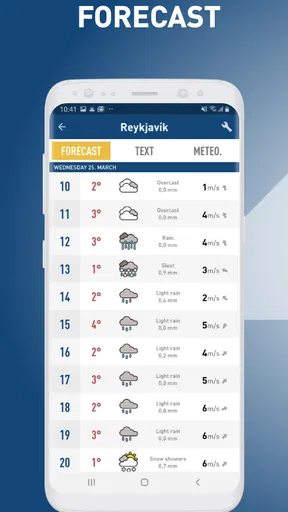
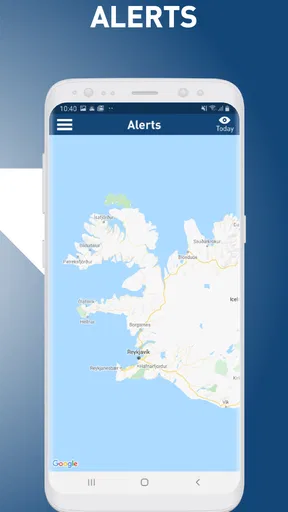
Our Review of Veður
 Analysis by Appyee
When I need a quick look at Icelandic weather, I usually do not want a crowded dashboard or a long forecast discussion. I want something I can open, read quickly, and use to decide whether I should take a jacket, change a travel plan, or wait before heading outdoors. That is the practical appeal of Veður: it focuses on bringing the weather forecast for Iceland to a phone in a direct, compact way.
After spending time with it, I see this as a focused weather app rather than a complete planning suite. The central capability is simple but useful: it puts Icelandic weather information in your pocket, with an interface intended for checking conditions instead of exploring a large collection of extra tools. That narrow purpose is also its main strength. It keeps the decision in front of me rather than making me sort through unrelated content.
Veður is a free weather app from Stokkur Software, available for everyone and supported on devices running Android 7.0 or later. Its current version is 2.2.8, and the app has been available since July 2013. With more than one hundred thousand installs and an average score of 3.7 from roughly five hundred ratings, it has found a real audience, although the rating also suggests that the experience will not satisfy every type of weather user.
Using Veður for a faster Iceland forecast
Before I get into the app’s broader strengths and limits, I want to look at what makes a quick Iceland forecast useful in practice: how much effort it takes to check, and whether that check fits naturally into a busy day. I’ll also consider how network access affects the routine, since a forecast is most valuable when I can consult it at the moment a plan is taking shape.
The useful idea behind the app
The most important thing about Veður is not a long list of features. It is the decision to make Icelandic weather the center of the experience. That matters because weather apps built for a worldwide audience often feel excessive when all I need is a local forecast. Their screens may include maps, alerts, radar layers, hourly graphs, lifestyle cards, advertising panels, and international location tools. Those additions can be valuable, but they also slow down the simplest task: checking what the day may feel like.
Veður makes more sense for someone whose regular weather questions are tied to Iceland. I can approach it as a pocket reference for everyday conditions rather than as a general-purpose weather encyclopedia. That distinction helps set expectations. If I am deciding whether to walk across town, prepare for a change in conditions, or check the outlook before leaving home, a compact local app can be more convenient than a large service designed to cover every country.
The capability is especially relevant for people who spend time outdoors in Iceland. Weather can influence a short commute, a coastal walk, a drive between towns, or a day of sightseeing. In those situations, the value is not in reading a forecast for entertainment. It is in making a small decision with current information close at hand. Veður’s focused identity supports that kind of repeated, practical checking.
What I look for when opening it
My first test with any weather app is whether I can understand the screen without learning a new system. Veður works best when I treat it as a quick check: open the app, identify the relevant forecast information, and decide what to do next. That workflow is more useful than repeatedly browsing through screens simply to find the basic outlook.
A good habit is to check it at two different moments rather than relying on one glance. I would look once before getting dressed or leaving home, then again before a longer trip or outdoor activity. This is not because a weather app can remove uncertainty; it cannot. It is because a short forecast check can prevent me from treating an early impression as a complete plan.
For visitors to Iceland, the app can also serve as a small daily routine. Instead of checking weather only when the sky looks unusual, I would use it before setting the day’s route. That is particularly sensible when a plan includes several stops or time outside. The app is most helpful when its information changes a decision, even if that decision is as simple as carrying another layer.
A realistic day-to-day example
Imagine that I am staying in Iceland and planning a morning walk followed by a drive. I open Veður before leaving and use the forecast to decide whether my original clothing and timing still make sense. If the conditions look less comfortable than expected, I can shorten the walk, adjust the departure time, or prepare better before stepping outside.
Later, before starting the drive, I check again rather than assuming the morning view still represents the rest of the day. That second check is one of the more useful ways to use a focused weather app. It turns the application into a planning checkpoint, not just a screen I consult once and forget. The benefit comes from building it into a routine around real decisions.
This workflow also shows the app’s limits. Veður can help me prepare, but it does not replace judgment. A forecast is not a guarantee of what I will experience at every point along a route. For demanding outdoor activities, I would still want more detailed specialist information and would avoid treating a simple phone forecast as the only basis for a safety-critical decision.
Where it fits beside larger weather services
The usual alternatives fall into two broad groups. One is the general weather app that covers many regions and often offers a broad collection of visual tools. The other is a browser-based forecast service that I open when I want a more detailed look. Veður sits between those choices: more convenient than searching from scratch, but more limited than a full forecasting platform.
I prefer Veður when speed and local focus matter more than visual depth. A larger service is the better choice when I need extensive maps, several locations, detailed comparisons, or a richer presentation of changing conditions. The trade-off is straightforward: Veður may reduce the effort needed for a basic check, while a broader service may give me more context for complicated planning.
That difference is important for households and travelers with different needs. Someone checking one Icelandic location several times a day may appreciate the direct approach. Someone monitoring family members in several countries may find a worldwide app more efficient. Neither choice is automatically better; the right one depends on whether local simplicity or broad coverage is the priority.
Small habits that make the app more useful
One useful habit is to check the forecast before choosing clothing, not after I have already committed to leaving. This sounds obvious, but it changes the role of the app from passive information to a preparation tool. I can make a better decision about layers, footwear, and how long I want to stay outside without repeatedly returning home for something I forgot.
A second habit is to use the app at transition points in the day. Morning conditions can create a misleading sense of what the afternoon will be like, especially when plans involve travel. Checking before departure and again before an outdoor activity gives the forecast a practical place in my schedule. It also reduces the temptation to assume that one glance settles the entire day.
A third insight is that a focused app can be easier to recommend to less technical users. If I were helping a relative who only wants Icelandic weather and does not enjoy complicated interfaces, I would rather begin with a narrow tool than with a feature-heavy service. The simpler choice may reduce confusion, provided that person does not need advanced maps or extensive location management.
Where the experience may feel limited
The 3.7 average rating tells me to keep my expectations measured. Veður is not the kind of app I would choose simply because I want the most polished or comprehensive weather experience available. Some users may want more depth, more visual detail, or a stronger sense of how conditions develop over time. A compact local forecast app can feel too restrained when the question is more complicated than “what should I expect today?”
The age of the project is also worth considering in practical terms. Since it first appeared in 2013, the app belongs to a long-running product rather than a newly designed weather platform. That can be reassuring for people who value familiarity, but it may also mean that users accustomed to modern, highly visual weather apps find the presentation less ambitious. I would judge it by how quickly it answers my everyday question, not by whether it resembles the newest forecasting interfaces.
Another trade-off is that a focused Icelandic tool is naturally less attractive for people who move between countries. If my routine includes several international locations, I would probably prefer an app designed around multi-location use. Veður makes the strongest case when Iceland is the main place I need to monitor, not when it is only one stop among many.
There is also a difference between convenience and certainty. A phone forecast can make planning easier, but it should not encourage overconfidence. For a casual walk, commute, or sightseeing plan, the app can be a sensible reference. For a demanding excursion, I would combine it with more specialized preparation and local judgment. That is not a criticism unique to Veður; it is an important boundary for any basic weather application.
Who will get the most from it?
I think Veður is best suited to residents of Iceland, visitors who want a straightforward daily forecast, and anyone who prefers a local app over a large international service. It is also a reasonable option for people using an older Android device, since the minimum operating-system requirement is Android 7.0. The fact that it is free removes the need to make a financial commitment before deciding whether its focused approach fits a personal routine.
The everyone age rating makes it suitable for a household where different people need the same basic weather reference. A parent can use it before a school run, a traveler can check before leaving a hotel, and an older family member can consult it without needing a specialized outdoor platform. The usefulness comes from the shared simplicity of the task, not from advanced personalization.
I would be more cautious about recommending it to users who expect a full meteorological workstation. If I wanted elaborate weather visuals, broad international coverage, or a detailed toolset for comparing many places, I would look elsewhere. I would also skip it as my only planning aid for serious outdoor activity. Veður is better understood as a convenient first check than as a complete replacement for careful preparation.
My recommendation after using it
What I like most about Veður is its clear purpose. It does not need to compete with every weather service on every possible feature to be useful. When I want Icelandic weather available on my phone and prefer a direct routine, the app can save time and make small daily decisions easier. Its free availability and broad age suitability make it easy to try without much friction.
What keeps me from giving it an unqualified recommendation is the same narrow focus that makes it appealing. Users who want a rich, modern, multi-location weather experience may quickly outgrow it. The moderate average score also suggests that personal expectations matter. I would not install it expecting a large collection of advanced forecasting tools; I would install it because I want a simple Iceland-centered forecast check.
For me, the best way to judge the app is to use it for a week of ordinary decisions: check before leaving, check again before longer outdoor plans, and compare how naturally it fits into the day. If that routine gives me the information I need without extra searching, Veður has done its job. Its real strength is turning an Iceland forecast into a quick planning step, not trying to become every weather tool at once.
Overall, I would recommend it to someone whose weather needs are mainly in Iceland and who values a focused, free app over a feature-heavy alternative. I would point a more demanding weather enthusiast toward a broader service, but for a resident or traveler who wants a practical forecast close at hand, Veður remains a sensible option from Stokkur Software.
Verdict
Strengths of Veður
- Clean, easy-to-read weather information in Icelandic.
- Useful local forecasts for planning outdoor activities.
- Quick access to current conditions and upcoming weather.
- Simple interface that is easy to navigate.
- Helpful for monitoring changing Icelandic weather patterns.
Limitations of Veður
- Limited usefulness outside Iceland.
- Some forecasts may vary by region or update timing.
- Icelandic-only content may challenge international users.
- May offer fewer features than larger global weather apps.
- Weather data depends on the accuracy of its underlying sources.
Similar Picks in This Category
View All
Weather - By Xiaomi
Xiaomi Inc.4.1

Weather & Radar Forecast
WetterOnline4.8

Weather
OneLouder Apps4.6

AccuWeather: Weather Radar
AccuWeather3.6

The Weather Channel - Radar
The Weather Channel4.6

1Weather Forecasts & Radar
OneLouder Apps4.3
Frequently Asked Questions
What is Veður and what can I use it for?
Veður is a weather app designed to provide current conditions, forecasts, and weather-related information in a clear format. It can help you check temperatures, precipitation, wind, visibility, and other details before commuting, traveling, exercising outdoors, or planning daily activities. The exact information available may depend on your location, device settings, and the weather data sources used by the app.
Does Veður provide accurate and reliable weather forecasts?
Veður can be useful for checking everyday weather conditions, but no weather application can guarantee perfect accuracy. Forecast quality may vary according to location, forecast range, local geography, and rapidly changing conditions. Short-term predictions are generally more dependable than long-range forecasts. For severe weather, outdoor work, travel, or safety-sensitive plans, compare the information with official meteorological warnings and local emergency guidance.
Does Veður require location access to work?
Veður may request location permission so it can automatically display weather information for your current area. You can usually choose whether to grant access while using the app, allow continuous access, or enter a location manually, depending on the platform and version. If privacy is important to you, review the permission request carefully and use manual location selection when available.
Can I use Veður without an internet connection?
Veður generally needs an internet connection to retrieve updated forecasts, radar information, alerts, or other live weather data. Some previously loaded information may remain visible temporarily, but it can become outdated quickly and should not be treated as current. If you are traveling or entering an area with limited coverage, open the app beforehand and remember that offline availability may vary by device and version.
Is Veður free to download, and are there advertisements or in-app purchases?
The availability, pricing, advertising, and optional purchases for Veður can differ between Android and iOS, as well as by region and app version. Before downloading, check the official store listing for details about subscriptions, premium features, advertisements, and any trial terms. Also review the privacy policy and requested permissions so you understand the app’s conditions before installing it.
